


 5 Min
5 Min
In OTC

Bookmark
Learning objectives
After studying this module, assistants will:
- Know how the lower GI tract functions
- Be able to identify different bowel issues
- Feel confident providing treatment advice.
Lower GI conditions can be uncomfortable, painful and inconvenient. Being able to identify symptoms and triggers, provide self-care tips and suggest effective OTC treatment options is crucial.
The GI tract
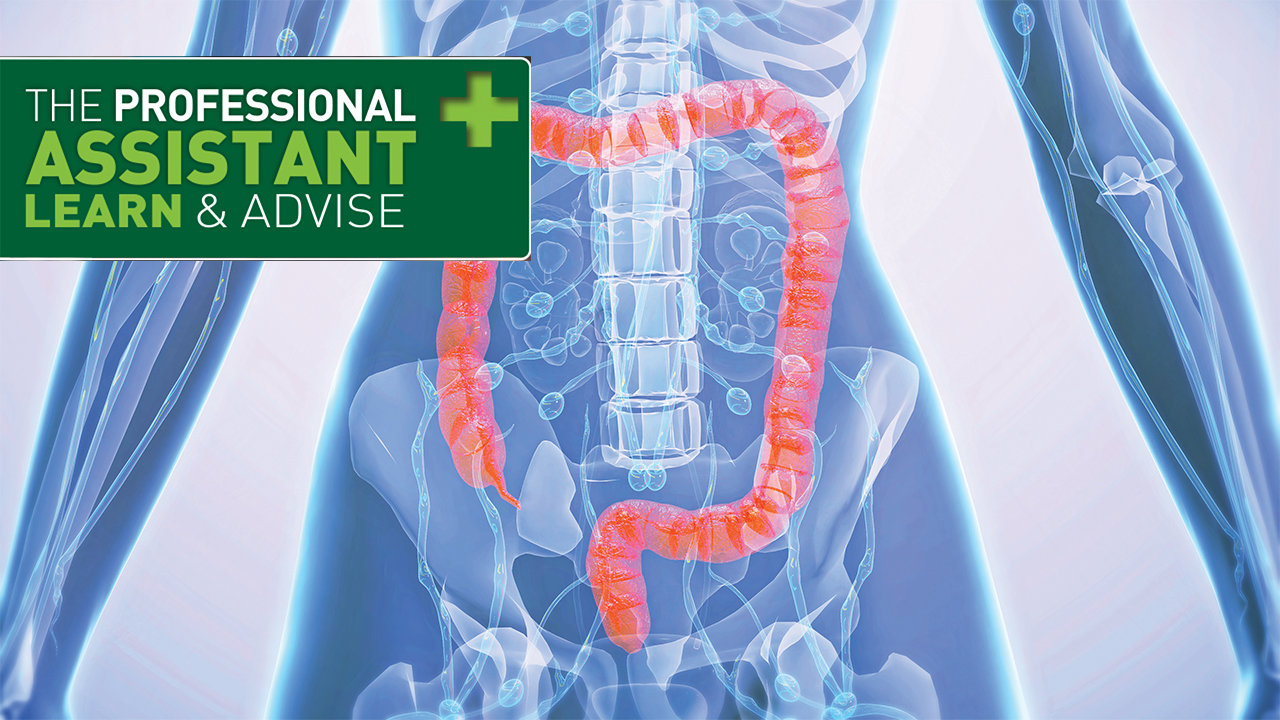
The gastrointestinal (GI) tract is a tube of muscle that runs from the mouth to the anus. It is generally referred to in two parts: the upper GI tract, which includes the mouth, oesophagus and stomach, and the lower GI tract, which includes the intestines, rectum and anus. The lower GI tract is often referred to as the bowel(s).
The main function of the small intestine is to continue breaking down food from the stomach, absorb nutrients into the bloodstream, and filter out waste material, which is then passed into the large intestine. The appendix, which sits close to where the small and large intestines meet, does not perform any important function in digestion.
In the large intestine, water and salts are absorbed from waste matter to create faeces. Millions of natural bacteria live in the colon, helping to break down undigested food, neutralising harmful substances and creating vitamin K, which is essential for blood clotting.
Muscular, wave-like movements called peristalsis push the contents of the colon down towards the rectum, triggering the need for a bowel movement, which is when faeces (stools) are expelled from the body through the anus.
Fast fact
Ignoring the urge to relieve the bowels can cause physical discomfort and may also cause or worsen constipation.